![]() | |||||||
![]() ![]() ![]() ![]() ![]() ![]() ![]() ![]() ![]() | |||||||
|
Pursuit A project from Jon Rose |
|
|
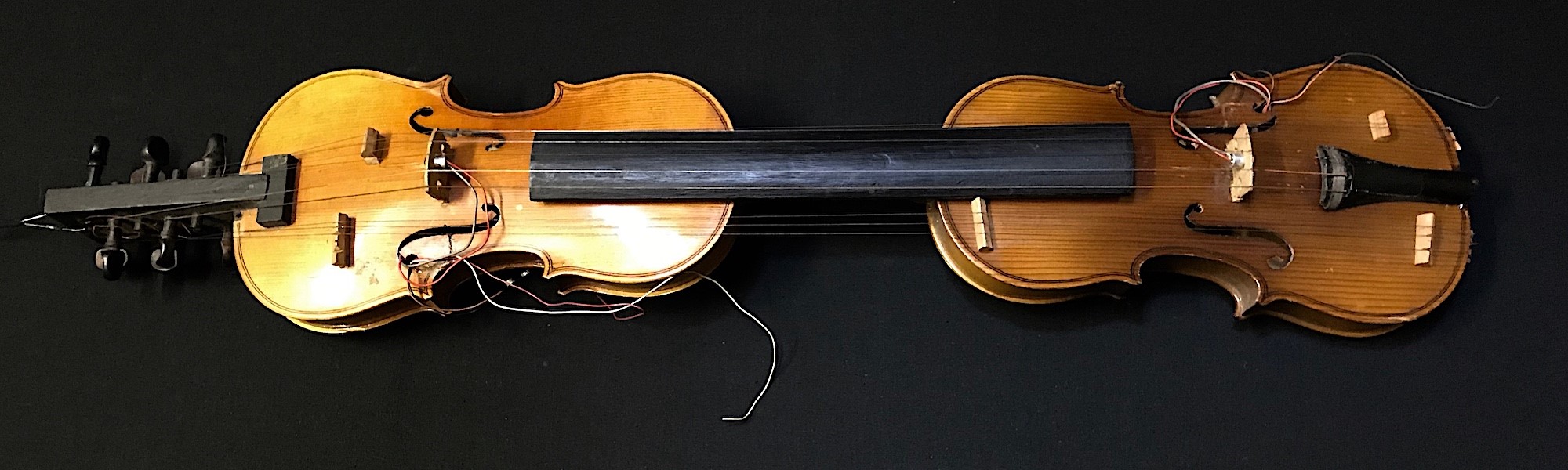
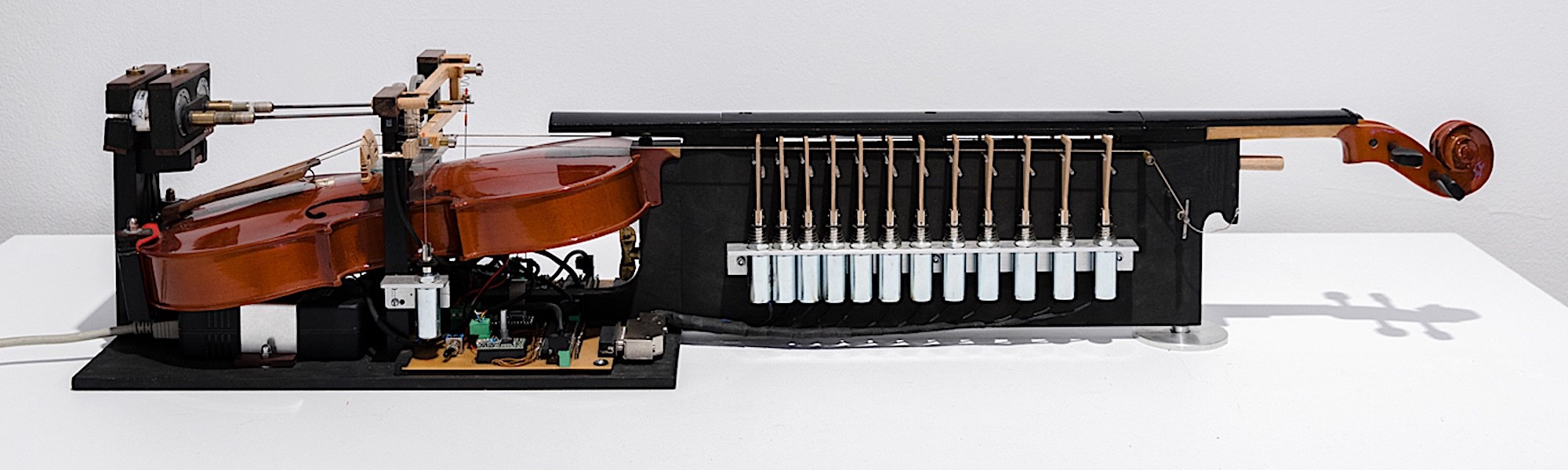
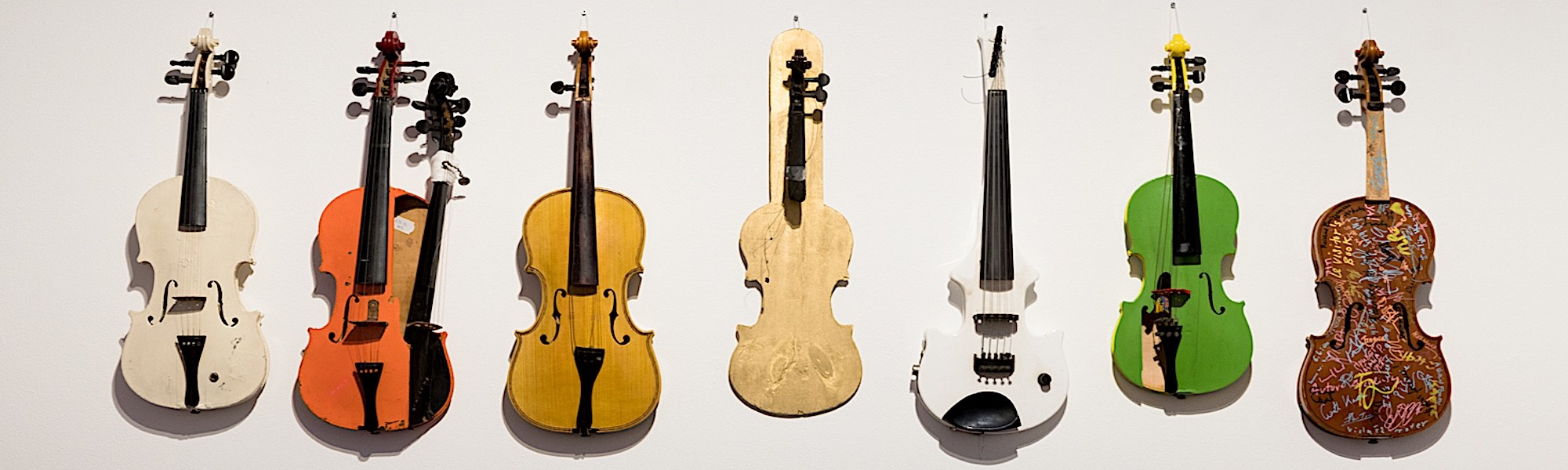
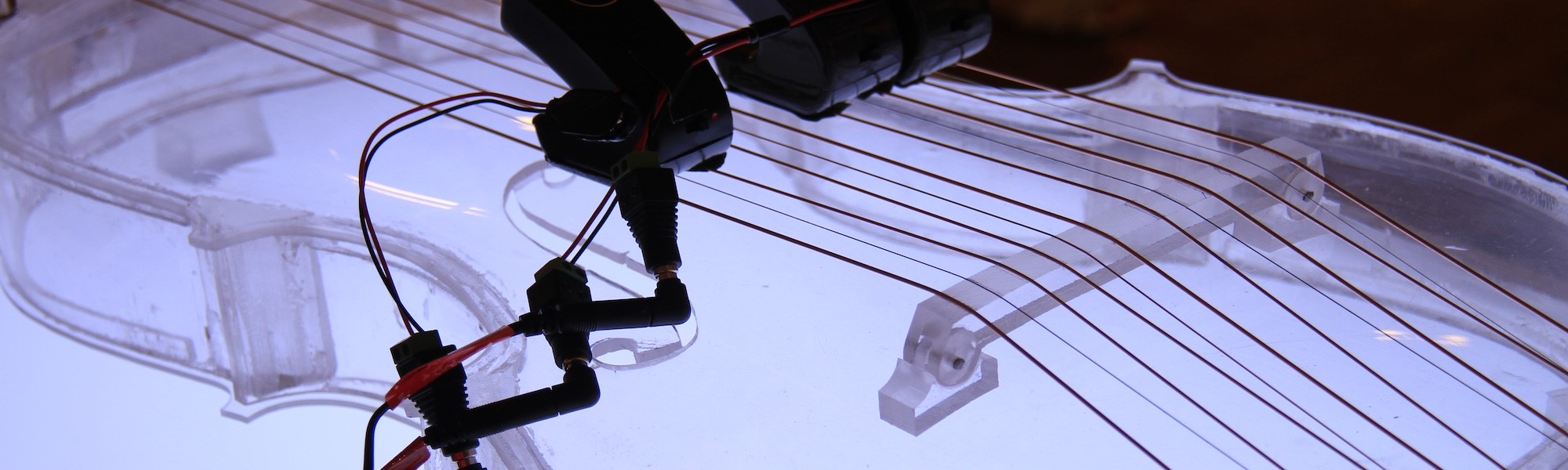
Imagine the huge darkened spaces of The Carriage Works - both inside around bay 19, the foyer, and outside in the front of the complex. The audience is assembled at various key points around the cycle track. Around them and past them bicycle powered sounds move physically through space at different speeds. Sometimes there is just one acoustic sound accompanied by the discrete lights of the bicycle. Sometimes the live sounds are digitally manipulated in quadraphonic surround complete with bicycle mounted laser show. Wireless transmission boxes link instruments and cyclists to a central mixer and quadraphonic sound system, offering more rotational speeds, sounds in contrary motion, and other options such as pitch shift and live sampling techniques to the live instruments. Close up images of the instrument mechanics appear on video screens beside the four speakers. Through an integrated MAX/JITTER system, live sound and action transforms the images into a synchronous experience. PURSUIT will take place on February 14th 2009 at The Performance Space Sydney and feature a veritable chamber orchestra of mobile, bicycle-powered acoustic musical instruments combined with the latest wireless transmission technology. Envisaged is a specially-choreographed spectacle of sound, speed and light based on pedal power lasting an uninterrupted marathon 3 hours. Bicycle musical instruments will be anything from simple clip on clickers, a range of bells and horns on the handlebars, to more complex constructions with wheel powered wind, string, or piano actions - even bicycle dynamo DC powered electronics. So far five bicycle powered prototype instruments have been built and tested; documented here as sound, image and video. The first instrument is called, logically enough, the VIOCYCLE. It is a violin played hurdy-gurdy style with a small wooden wheel geared down to a suitable speed by a set of rollers and belts. A bowing speed lasting two seconds from frog to tip of bow (0.6 meters) was estimated and the gearing set accordingly. Even at a test speed of 15-20 kilometers per hour, phenomena such as phasing, delays, and pitch shift caused by the Doppler effect, are clearly audible and stunningly enhanced by the acoustics of the space. As one can hear from the sound on this page, a doppler shift of a semitone was recorded. The violin sounds pure and is about three times louder than a normally-bowed instrument. The next stage will be to fit guitar machine heads instead of pegs for ease of tuning and re-tuning while underway and to build a simple capo-style system for elementary shifts of pitch - basically so anyone with a good ear will be able to ride and play. The second instrument to be tested was the PIPECYCLE. A range of diapason pipes and whistles were powered by a huge set of bellows bolted onto the back of the bicycle. Since initial testing a windbox has been fitted with sliders controlling the airflow to a range of flu and reed pipes - like a simplified church organ mechanism. The summer of 2006/7 has seen the transformation of domestic objects into cycle powered musical instruments. (Not quite) everything including the kitchen sink has been applied to cycle technology. The Sink, the Rolling pin, and the Lawn Mower have all been subjected to chains, pulley ratios, and gearing mechanisms. The dynamics of the wheel has remained central to these experiments. Harry has built a unique plectrafone (a cross between a huge guitar and a harpsichord) for use in the Pursuit. Paul has welded two violins, wheels and pulleys to a stationary keep fit bike. In planning are a bicycle powered turntable, a cog driven revolving car horn speaker, and an accelerometer based (wireless) interactive electronics system for cyclist. The full chamber orchestra will consist of four bowed string instruments modelled on the above. The basic belt driven mechanism will, however, drive 2 PIANOCYCLES, 3 PIPECYCLES, and 3 DRUMCYCLES - all yet to be built. PIANOCYCLES will utilise the soundboard and strings of an autoharp (like a very small piano) in the same position as the violin above the front wheel on the bicycle. The belt mechanism will drive a series of hammers which will strike the strings at speeds beyond that of a player piano. PIPECYCLES could end up using a variety of mechanisms. Whistles could be driven by air collected in a funnel attached to the back of the frame but positioned above the cyclist; cycle crank powered fans and bellows will create enough wind pressure to make larger organ pipes speak. These bicycles will be hard work to ride, so musicians will need to be in top physical condition (well not really). DRUMCYCLES will utilise the belt mechanism in a similar way to the PIANOCYCLES - an estimated two tuned drums to each bike, plus a 'clicker' which will work directly off the spokes of the rear wheel. In 1980 I performed a 12 hour marathon violin solo which took place appropriately in a festival entitled 'Sound Barriers' at The Ivan Dougherty Gallery, Sydney. The Pursuit project will also tend towards the marathon notion of time. Hopefully, the performance will run for several hours. Perceptions of speed and time start to transform themselves once we escape from the sound bite, the time limitation of a CD (the length of which was based on the slowest version of Beethoven's 9th Symphony), or the duration of a Hollywood movie. THE INSTRUMENT MAKERS. Harry Vatiliotis is Australia's most known and prolific violin maker with a massive international and local reputation. He has made over 500 excellent classic instruments but is not averse to experimentation; he has built a complete set of ancient Greek harps, and he recently built a superb hybrid tenor violin (The Bird) fitted with four sympathetic strings (in the style of a Hardinger fiddle) for specific string scordatura projects. Paul Bryant earns his living as a family dentist but has a passion for bicycles, violin building (one of Harry's ex-students), metal work and mechanics. Paul is something of a Renaissance man and is ecologically and politically active. He is also a founding member of the NSW touring Bicycle Club and has a collection of 20 seriously used cycles in his shed ... which MUST have some relevance to this project. The prototype VIOCYCLE and PIPECYCLE shown on this page were made quickly from available materials and are unashamedly in the 'Heath Robinson' funky class of instrument making and hacking. However they work well under test conditions and the sounds are impressive. If sponsors can be found for this project, then highly crafted, finished and polished musical instruments suitable for top racing bikes are envisaged. Eh... on yer bike! The obsessions of Pursuit: 1. The transformation of sound at speed. 2. The rhythms and sonic ratios of the wheel. 3. The necessity of physical action in the experience of music. 4. The relationship of sport to music. Previous projects have included: Duets for violin and amplified squash court and player (Praxis, WA, 1983); Cricket - a musical adaptation of the national sport complete with amplified bat and strung wicket stumps (Performance Space, Sydney, 1986); Perks - an interactive badminton game based on the mind and obsessions of Percy Grainger (Berlin Sonambiente Festival, Brisbane Biennale, Ars Elektronika Austria, Steim Amsterdam, Mousontürm, Frankfurt 1996-7). Then there are some of the specially-built Relative Violins of the early 1980s, such as the Double Piston Wheeling Violin and the Bicycle Wheel-Powered Violin, made to test musical notions of time, distance and speed. The Ball project is currently in its second year of development. JR |
|
| - - - |